Fundamentals of Expedition Guiding Course
In-person and Online
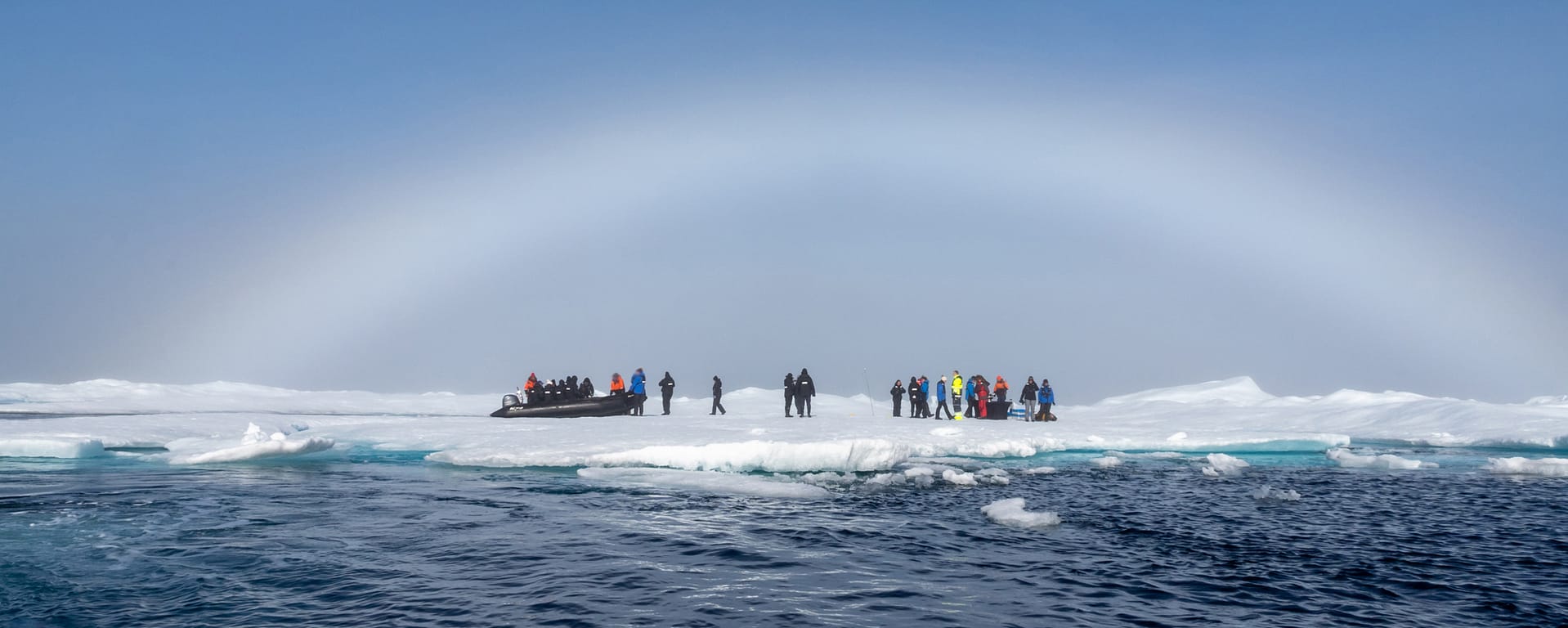
This is a core course for those wishing to become expedition guides. In this course, we will assist you in gaining the knowledge to be able to guide in the polar regions and how to share that with your guests. By the end of this module, you will have prepared presentations ready to give onboard, be able to lead hikes and interpretive activities, as well as be comfortable with the use of a two-way radio and satellite phone. The modules in this course are run concurrently, allowing you to develop and practice your skills as we go through the theory. While we do focus on the polar regions, what you will learn on this course is equally applicable to warmer regions.
This module can be done remotely by Zoom (in real time) together with the students participating in-person.
This is a comprehensive module which includes the following focus areas:
- Building a knowledge base
- Presentation skills
- Guiding skills
- Communication skills
- Interpretation skills
- Leading hikes
- Ice assessment and crevasse awareness
GOOD TO KNOW
Duration: 6 Days
Cost: In-Person: US$2 400
Cost: Online: US$1 850
PTGA Alignment:
- Radio and satellite communication
- Presentation skills
- Lead a hike in non-technical terrain
- Thematic interpretation
- Crevasse awareness & management
The Fundamentals of Expedition Guiding
In-Person or Online
1. BUILDING A KNOWLEDGE BASE
As expedition guides, we are expected to be able to guide, interpret and answer questions on any number of topics. This is often the part that new guides are the least prepared for and yet our guests expect us to be walking encyclopaedias. We will assist you in developing your knowledge of the polar regions in such a way that you are able to guide and interpret your environment. This is the start of a life-long learning process, so participants who come to us with previous guiding experience will be challenged with more complex information to assimilate and interpret.
The general categories we will cover include:
- Overview of the polar regions
- Weather and climate (including climate change)
- Geology
- Birds
- Plants
- Marine Biology (whales and seals)
- Glaciology
- History
- Ecology of polar regions
2. DEVELOPING PRESENTATION SKILLS
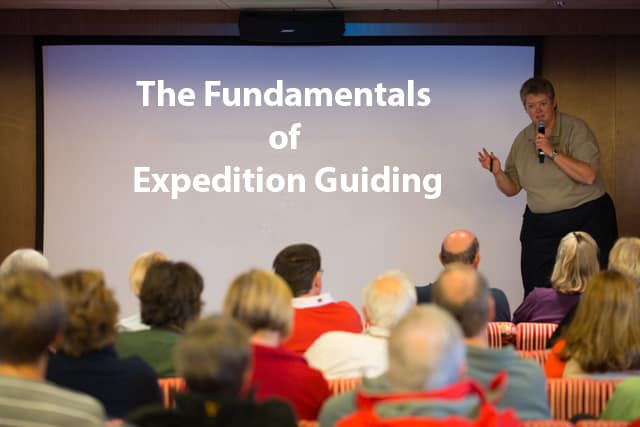
Expedition guides are required to deliver short 5-8 minute or longer 40 minute presentations on relevant topics. These need to be prepared in advance of joining the ship. During this module, we will work on developing and presenting lectures on relevant topics.
- Prepare a venue for a presentation.
- Pre-brief the discussion.
- Tips and tricks to creating a presentation with punch.
- Introduce a presentation.
- Deliver a presentation.
- Conclude a presentation.
PTGA Alignment: Presentation skills.
3. DEVELOPING GUIDING SKILLS
- Life onboard and expectations of expedition staff.
- IAATO/AECO and the organisations regulating tourism.
- Ethics in guiding.
- Human factors and situational awareness for polar guides.
- Escorting tours.
4. COMMUNICATION SKILLS
Communication between different groups require different approaches according to the situation. We will cover communication between:
- Guides and guests
- Within the expedition team
- Within different departments
- How to deal with difficult guests
- Communication in emergencies
4.1 Radio and satellite phone communications
- Understand the advantages and limitations of VHF or UHF communications systems.
- Use the control features of a given radio.
- Radio care.
- Radio protocol as required by the organisation for sending/receiving messages.
- Messages are communicated or relayed under difficult conditions.
- Demonstrate an understanding of the range and limitations of a satellite telephone for your given location.
- Demonstrate a call to a given number.#
- Demonstrate satellite telephone problem solving.
PTGA Alignment: Radio and Satellite communication.
5. LEADING AN INTERPRETIVE ACTIVITY
Whether you are guiding a Zodiac cruise, a short interpretative walk or ship cruising, we need to be able to lead interpretive activities. This module will cover:
- Briefing guests (where necessary)
- How to deliver a thematic interpretive discussion using the TORE model, including using stories and anecdotes, interactive questioning and tailoring information for the audience.
- How to conclude a discussion/activity.
- Participants will have practice scenarios to gain experience with thematic interpretation.
PTGA Alignment: Thematic interpretation.
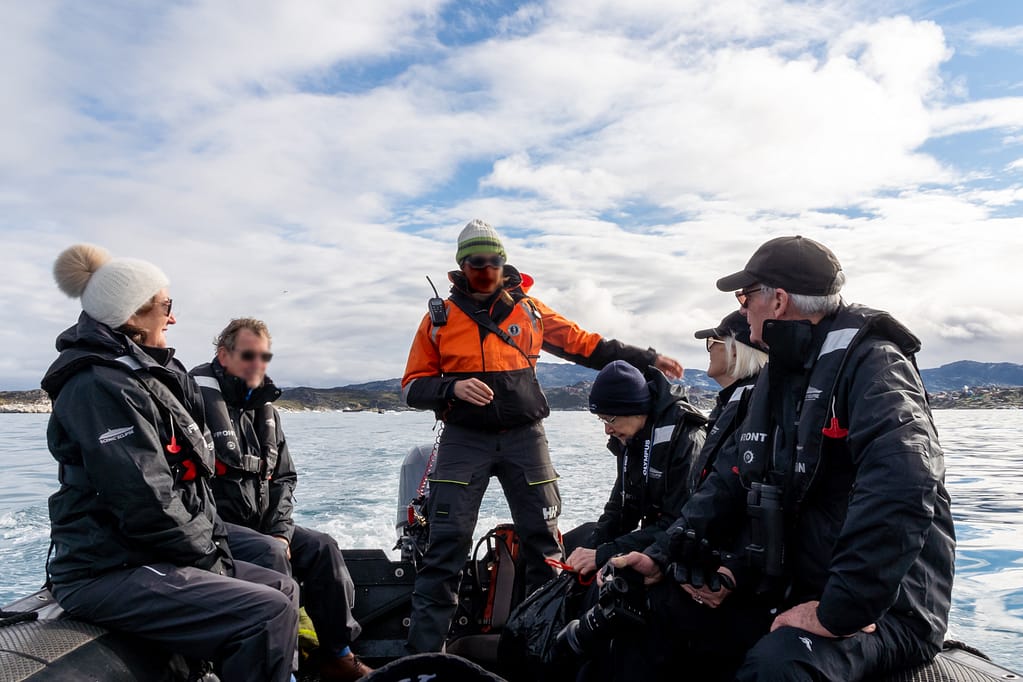
6. LEADING A HIKE IN NON-TECHNICAL TERRAIN
One of our key roles as expedition guides is to take guests on non-technical hikes where neither ropes nor special equipment is required. Guides need to learn how to plan, prepare and manage a hike with guests who may have different interests and capabilities, as well as deal with potential emergencies.
By the end of this module, you will be able to:
- Deliver a written plan for a hike (hike duration >2hours) that is suitable for a given guest group.
- Personally prepare for a hike.
- Demonstrate strategies to collect relevant local information.
- Brief clients on the intended hike at various sites (on a ship, beach or at a camp/base).
- Effective management of the group.
- Demonstrate efficient and confident personal movement in a range of different terrain.
- Demonstrate the use of, and can describe the advantages and limitations of different methods of communication suitable for use on a hike.
- Demonstrate knowledge and theory of emergency shelters available for a given hike.
- Demonstrate and explain safe practices in and around polar waterways.
- Demonstrate knowledge of and role model accepted tour operator practices.
PTGA Alignment: Leading a hike in non-technical terrain.
7. ICE ASSESSMENT, CREVASSE MANAGEMENT AND RESCUE
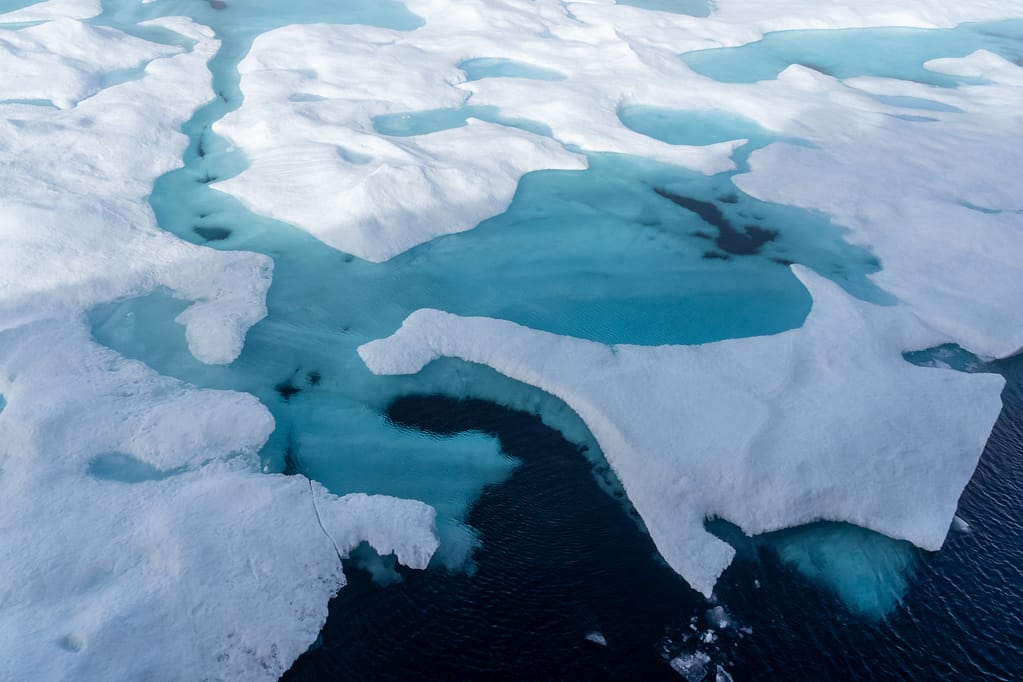
This component has both theory and practical sessions. We will learn the theory of assessing ice for ice landings. We will also learn about glaciers, ice movement and the formation of crevasses. We will discuss the sites with well-known crevasses in areas of operation and how to scout an area for crevasses.
Our practical session will cover rope work and scenarios and we will head out to the mountains where we gain practical experience on the rockface, to learn the ropes and procedures to conduct a crevasse rescue. This component will not make you a crevasse rescue expert but will prepare you for assessing and operating on ice and in crevassed areas.
Note: If you complete the course remotely, you will not be able to participate in the practical session, but will have the theoretical knowledge required to assess ice and crevasse management required by the PTGA.
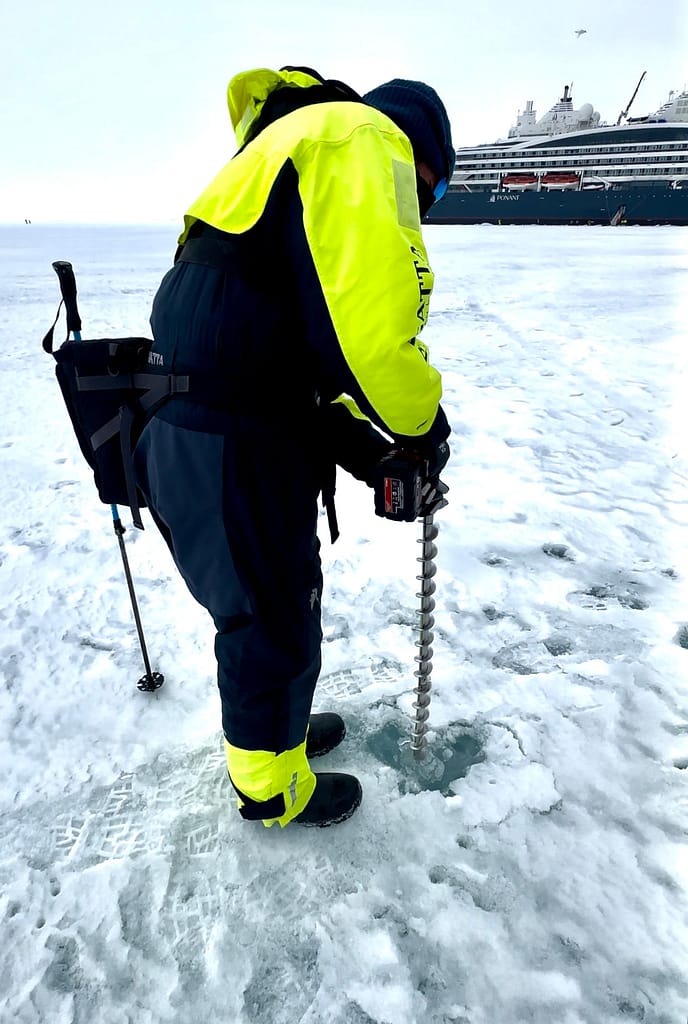
By the end of this component, you will have learnt:
- How to assess ice prior to an ice landing.
- How to identify known crevasses and the risks/hazards that are commonly associated with them.
- About glacial, snow field and sea-ice processes and features and identify common hazards.
- Management techniques for locating, marking and managing a site.
- Techniques and personal safety options used for safely locating known crevasses.
- Techniques for marking known crevasses and disclosing risk.
- How to safely extract someone from a known feature without technical equipment.
- How to secure the site.
- How to perform a non-technical extraction.
PTGA Alignment: Crevasse awareness and management.